The world of business is sometimes like a narrow boat on the vast ocean.
A trusted partner may turn a knife in your back, and an unexpected crisis may threaten to bring the tower you painstakingly built down to the brink of collapse.
How was he able to save his and his son's lives and even recover his lost fortune in a desperate crisis?
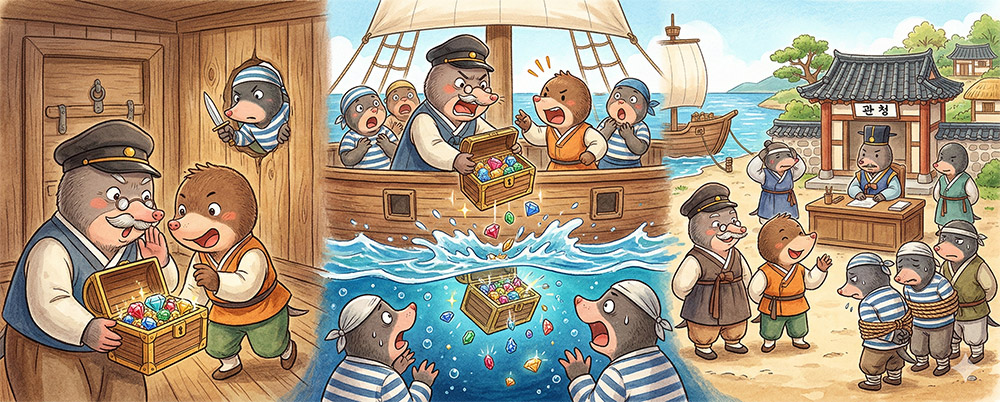
A merchant father and son sailing discover a conspiracy by the crew to kill them and steal their jewels.
The son said, "Let's fight," while someone else would likely say, "Let's just give them the jewels." However, the seasoned merchant knew.
If you fight? You will be killed due to being outnumbered.
If you just give it to him? You will eventually be killed to keep quiet.
Here, the merchant displayed the 'technique of reverse thinking.'
He acted out a fierce fight with his son on the deck and threw the jewelry box into the sea in front of everyone.
"You scoundrel! I would rather throw it into the sea than leave it to this ungrateful son!"
This extreme performance instantly evaporated the sailors' 'motive for murder.'
This is because, to the sailors who had lost the jewels to steal, murder became a 'meaningless crime' that merely entailed punishment.
Hidden within this short story are three key strategies that are essential in modern business.
The merchant cleverly shifted the frame from 'robber and victim' to 'discord between father and son.'
He seized the initiative by acting in a way that the opponent could not predict.
Simply claiming to have been "threatened" is weak.
However, the 'abnormal behavior' of throwing his entire fortune into the sea later became strong circumstantial evidence in court, serving as a testament to the question, "How great must the threat to his life have been for him to act that way?"
Discarding the jewelry immediately appears to be a 100% loss. However, this was a 'strategic retreat' to save a life and
to receive compensation later through legal proceedings.
While the young son's boldness is important, the wit of the seasoned merchant turned 'desperation' into 'opportunity.'
Rather than responding emotionally, wisdom is needed to grasp the opponent's psychology and shake up the entire game.
The merchant did not attempt to resolve the problem inside the ship.
As soon as I landed, I rushed to the 'City Hall (public system)' and used the sailors' testimonies to my advantage.
When running a business, we, too, face crises where it feels like we might lose our entire 'jewelry box.'
At those times, remember this: that sometimes, you must pretend to discard what is most precious in order to protect what is truly precious.
The wit to maintain composure even in the midst of a crisis—that is the true skill of 'clever entrepreneurs' who have weathered countless storms.